
Brewing Instructions
Brewing Instructions
Enjoy specialty coffee beans
From Don Pablo Coffee
At Don Pablo Coffee, we source specialty Arabica from small farms across Central and South America and roast it in small batches in Miami, Florida, to bring out its full flavour. We ship it to Saudi Arabia by air, and the roast date is printed on every bag.
The best way to get the most from Don Pablo coffee is to brew it the right way. Brewing coffee is both an art and a science, and every method gives a different cup. Follow this guide to brew a great cup at home with our whole beans, whether you use a V60, a French press or an espresso machine.
Freshness matters
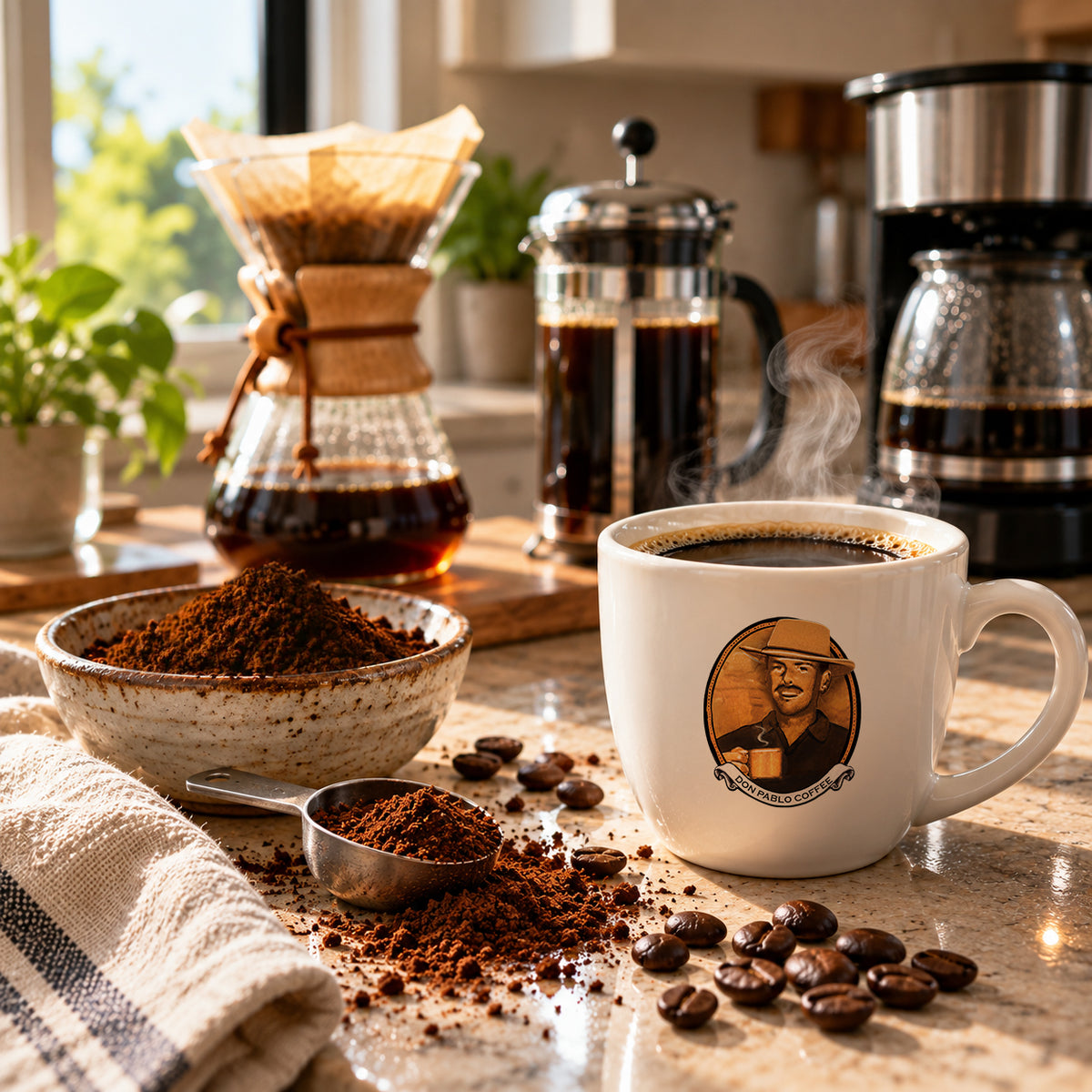
When it comes to enjoying a cup of coffee, freshness comes first. After roasting, coffee needs time to “rest.” During this time it releases gases and develops the oils and aromas that give it its best flavour. We take care of this stage and pack our coffee as whole beans at peak freshness, then ship it by air with the roast date printed on every bag.
Whole beans stay fresh much longer than ground coffee. Once you grind the beans, oxidation begins and the flavour starts to fade, so grind just before you brew. Keep the bag closed and away from heat, light and moisture.
Roast style and strength
Do you like your coffee “strong”? In the coffee world, strong does not mean more caffeine or a bitter taste. Strength means richness: a full, satisfying flavour and body. You control it with the brewing ratio, the amount of coffee you use for the amount of water.
Roast level changes the flavour. A darker roast fully caramelises the natural sugars in the bean and adds a bold “punch” of flavour, and it stands up well to milk and sugar. Our range includes a medium roast (Gustavo’s Geisha), medium-dark roasts (Signature Blend, Colombian Supremo, Subtle Earth Organic and our two Swiss Water decafs) and dark roasts (Classic Italian Espresso, Pablo’s Pride Organic Dark Roast and Charbeanz).
Grinding the beans
All our coffees come as whole beans, because the freshest way to enjoy your cup is to grind at home right before brewing. This keeps the coffee’s flavour compounds intact and is the real secret to better coffee at home.
Grind size has a big effect on the result because it controls how water flows through the coffee. The finer the grind, the more surface is exposed and the more flavour and oils are extracted. Espresso needs a fine grind; French press and cold brew need a coarse grind. Use the quick reference table below to find the right grind for your method.
Water is important
Water makes up most of your cup, and it is what extracts the flavours, oils and minerals from the roasted beans. Poor-quality water will always spoil a good coffee, so use fresh bottled, mineral or filtered water.
The minerals in water help the extraction, but water that is not clean, or that contains chlorine or other unwanted elements, changes the taste of your cup.
Brew our coffee with water between 88°C and 91°C (190–195°F), and never hotter. If you do not have a thermometer, boil the water and let it stand for two minutes, or add a splash of cold water before pouring it over the grounds. Most electric coffee makers set the temperature for you.
Brewing your coffee
The brewing ratio is the amount of ground coffee you use for the amount of water. Grind size, water temperature, ratio and brewing time all work together. For consistent results, use a kitchen scale. If you do not have one, we have included tablespoon measures too.
Brewing ratio: for a balanced cup with drip and most filter methods, we recommend 10–11 g of coffee (one slightly rounded tablespoon) for every 180 ml of water.
For espresso and other styles, follow your machine’s guidelines or your own taste. The more you brew, the more you will fine-tune your perfect cup.
| Method | Coffee | Water | Grind |
| Traditional Drip Machine | 1 rounded tbsp (10 g) | 180 ml per cup | Fine |
| Hand Drip (V60) | 8–10 g per cup | 88–91°C | Medium-fine |
| French Press | 1–2 tbsp (10–20 g) | 180 ml, not boiling | Coarse |
| AeroPress | 15 g | 200 ml, hot | Medium-fine |
| Moka Pot | Fill basket, not pressed | Up to the safety valve | Medium-fine |
| Espresso Machine | Fill portafilter to the line | As your machine says | Fine (espresso grind) |
| Single-Serve Reusable Filter | Fill to the line | 180 ml cup | Medium |
| Iced Pour-Over | 10 g per 180 ml serving | 120 ml hot + 60 g ice | Medium-fine |
| Cold Brew | Equal parts coffee and water | Steep 12–24 hours | Coarse |
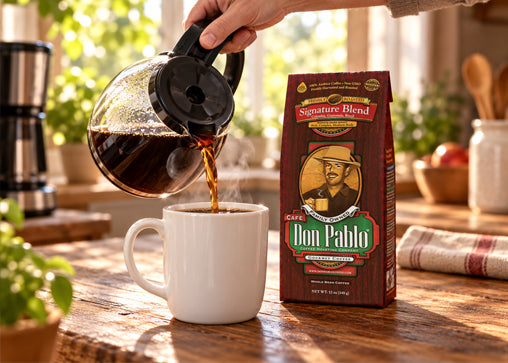
Add one level to slightly rounded tablespoon (10 g) of finely ground coffee (like fine sand, not yet a powder) for each 180 ml cup.
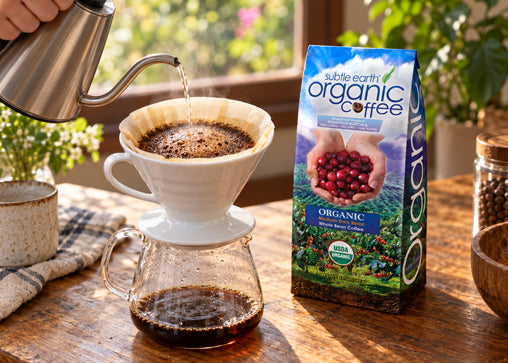
Add 8–10 g of medium-fine ground coffee per cup. Heat the water to 88–91°C, wet the grounds first to let them bloom, then pour slowly in circles. Adjust to taste.
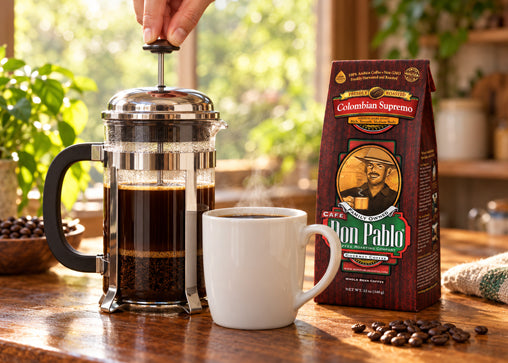
Add 10–20 g (1–2 tablespoons) of coarse ground coffee for every 180 ml of water and adjust to taste. Never use boiling water.
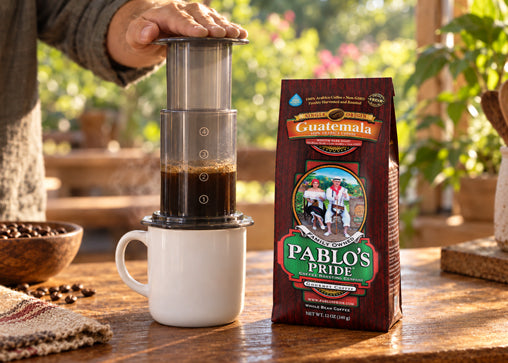
Place a paper filter in the cap, attach it to the AeroPress and set it on a sturdy mug. Add 15 g of medium-fine ground coffee and 200 ml of hot water. Stir, insert the plunger and steep for 1 minute. Press down gently and enjoy.
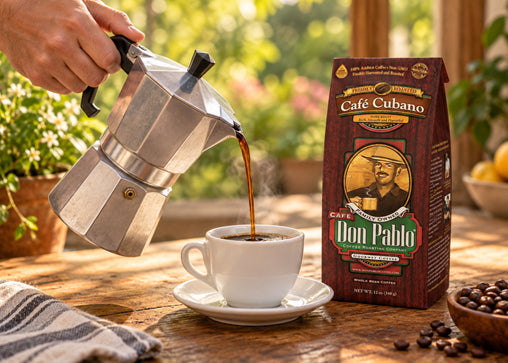
Fill the bottom chamber with water just below the safety valve. Fill the filter basket with medium-fine ground coffee without pressing it down. Screw the pot together and brew over medium-low heat. Remove from the heat when the coffee begins to sputter, then pour and enjoy.
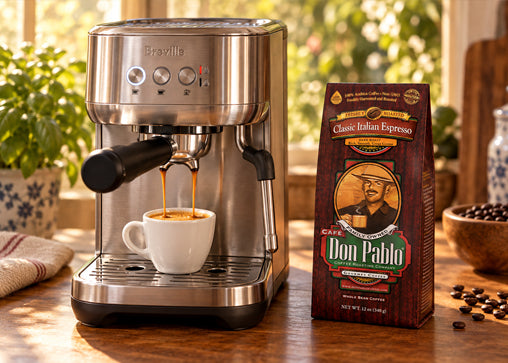
Fill the portafilter to the line with espresso-ground coffee. Getting the grind just right gives you the most crema. Our Classic Italian Espresso is made for espresso machines.
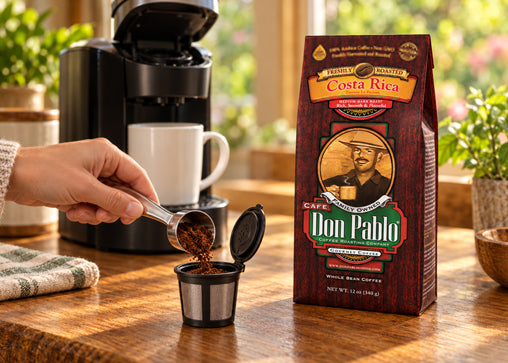
Fill your reusable filter with medium ground coffee up to the fill line without pressing it down. Close the lid, place it in your single-serve brewer and choose a 180 ml cup.
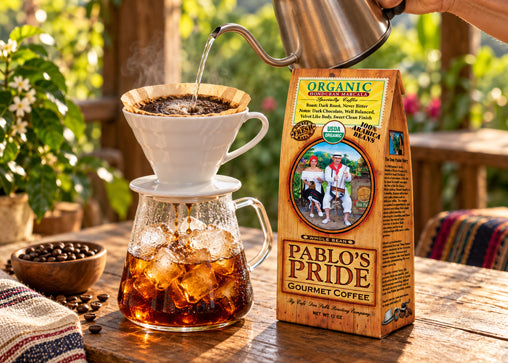
Use 10 g of medium-fine ground coffee for each 180 ml serving. Put 60 g of ice in the carafe. Pour a little hot water over the grounds and let them bloom for 30 seconds, then slowly add the rest, 120 ml in total. Let it drain, swirl and enjoy.
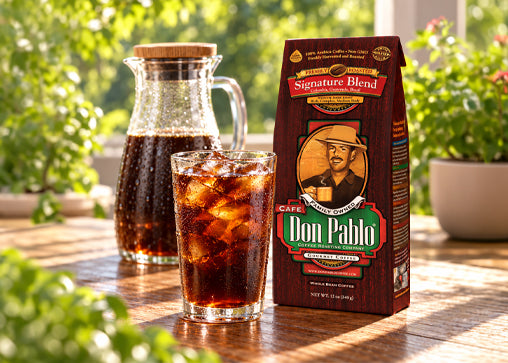
Steep equal amounts of coarse ground coffee and filtered water in a covered container for 12–24 hours. Strain, then pass through cheesecloth or a paper filter to remove the remaining grounds. Add water to taste.
Coffee makers and
brewing systems maintenance
Great-tasting coffee starts with clean equipment. After each use, throw away the used grounds and rinse filter baskets, carafes and reusable filters well. Wash removable parts as the manufacturer recommends to remove coffee oils and residue that can affect the taste. Let all parts dry completely before storing, and use a fresh paper filter for every brew.
Descale your coffee maker regularly to remove mineral build-up, especially if you use hard water. Follow the manufacturer’s cleaning schedule and use an approved descaling solution. For espresso machines, wipe and purge the steam wand after each use and clean the portafilter and group head regularly.
Brewing FAQ
Between 88°C and 91°C (190–195°F) for every roast, and never hotter. Hotter water over-extracts the coffee and brings out bitterness.
For a balanced cup with most filter and drip methods, use about 10–11 g of coffee, roughly one slightly rounded tablespoon, for every 180 ml of water.
Yes. Once beans are ground, oxidation starts right away, so grinding just before you brew keeps the flavour at its best. That is why all our coffees come as whole beans.
It depends on your method: coarse for French press and cold brew, medium-fine for V60, AeroPress and Moka pot, and fine for espresso and drip machines. See the quick reference table above.
12 to 24 hours, using equal parts coarse ground coffee and filtered water, then strained through cheesecloth or a paper filter.
Rinse removable parts after every use, and descale regularly to remove mineral build-up, more often if you use hard water. Follow your machine’s recommended cleaning schedule.